
In almost every conversation we have with senior leaders before a program begins, someone says a version of the same thing: we have the strategy. We just can't seem to get the organization to move.
It's rarely said as a question. Usually as a frustration. And it points to something most organizational change roadmaps miss entirely.
Change doesn't fail because the vision is wrong. It fails because the system between the vision and the people is broken — and most organizations don't know how to look at that system clearly enough to fix it.
McKinsey has documented for years that approximately 70% of organizational transformations fail to achieve their intended outcomes. Gartner puts the healthy adoption rate at around one in three change management efforts. PMI estimates that organizations waste close to 10% of initiative investment due to poor execution.
The numbers are consistent. What's less often discussed is where the failure actually lives.
It's not in the boardroom. Senior alignment, in most organizations, is achievable. Leaders can agree on direction, sign off on budgets, and communicate urgency.
It's not at the frontline either. Employees, given real clarity and the right conditions, can and do adapt.
"Change dies in the middle — in the layer of managers responsible for translating change leadership intent into operational reality."
They absorb pressure from above and emotion from below, and are almost never given the tools to do either job well. When that layer breaks down, the organizational change effort doesn't look like failure. It looks like delay. Quiet recalibration. Execution that's technically moving but not really going anywhere.
That's the hardest kind of failure to diagnose, because by the time it's visible, significant energy has already been spent.
The workplace is not simply evolving. It is being rebuilt — and the pace of that rebuild is compressing the space where managers operate.
Hybrid work created fragmentation that organizations across the Philippines and Asia are still trying to design around. Research from 2024 points to role ambiguity as a primary driver of burnout in distributed teams, with cognitive overload rising as people switch between contexts that don't share the same rules.
AI is reshaping what people performance means. As James Matti, entrepreneur and business leader, put it in a conversation on the Cherry Africa Podcast: "People think the future of work is AI. It's not." What he was pointing to is the deeper shift — execution is increasingly automated, judgment is becoming the core value, and the leaders who will matter most are the ones who can think clearly under conditions that keep changing.
Add five generations in one organization, each with a different relationship to authority and direction, and the picture becomes clear: the manager standing in the middle of all of this is not failing from weakness. They're carrying a load that was never designed to be carried alone.
Most organizations treat culture as messaging — something you communicate, workshop, and put on a wall. The organizations we see actually sustaining performance through organizational transformation treat it differently.
They treat culture as infrastructure.
The distinction matters. Infrastructure has to be designed, maintained, and stress-tested. It doesn't run on intention — it runs on system. On what behaviors are actually reinforced. On what structures create psychological safety. On how internal mobility builds capability density instead of talent hoarding.
James Matti captured the practical version of this when he said: "Culture always trumps pay." He wasn't making a motivational point. He was describing what he's seen actually determine whether teams hold together when change management pressure is highest.
High engagement — the kind that comes from people who understand the direction and trust the environment — correlates with up to approximately 30% better performance outcomes across multiple studies. That's not a soft metric. That's the business case for treating your culture transformation like it actually has to work.
Winning requires changing. Organizational transformation in 2026 doesn't fail from a shortage of ambition. It fails from a shortage of people who know how to lead through the human reality of change — who can hold clarity while things are uncertain, who can create safety while things are moving, who can turn strategy into behavior rather than just a communication.
The movement from hierarchies to networks, from rigid jobs to fluid roles, from output metrics to outcome thinking — none of that happens by announcing it. It happens because the team transformation has been built into the people, not just the org chart.
At World Stage International, this is the work we do. Not the workshop before the work — the actual work of building leaders, teams, and cultures that can absorb change and move.
Building that capacity is the work.
Cherry Pua Africa Podcast
On the Cherry Pua Africa Podcast, Coach Cherry Africa — The Emotions Expert — explores the emotional architecture underneath organizational change: what leaders are actually carrying when transformation is announced, and how that shapes whether it lands or fails.
In a recent conversation with James Matti — entrepreneur, investor, and someone who has navigated team transformation from both sides — the discussion moved beyond strategy into something harder to name: what it actually takes for people to trust the direction enough to move.
→ Listen to the episode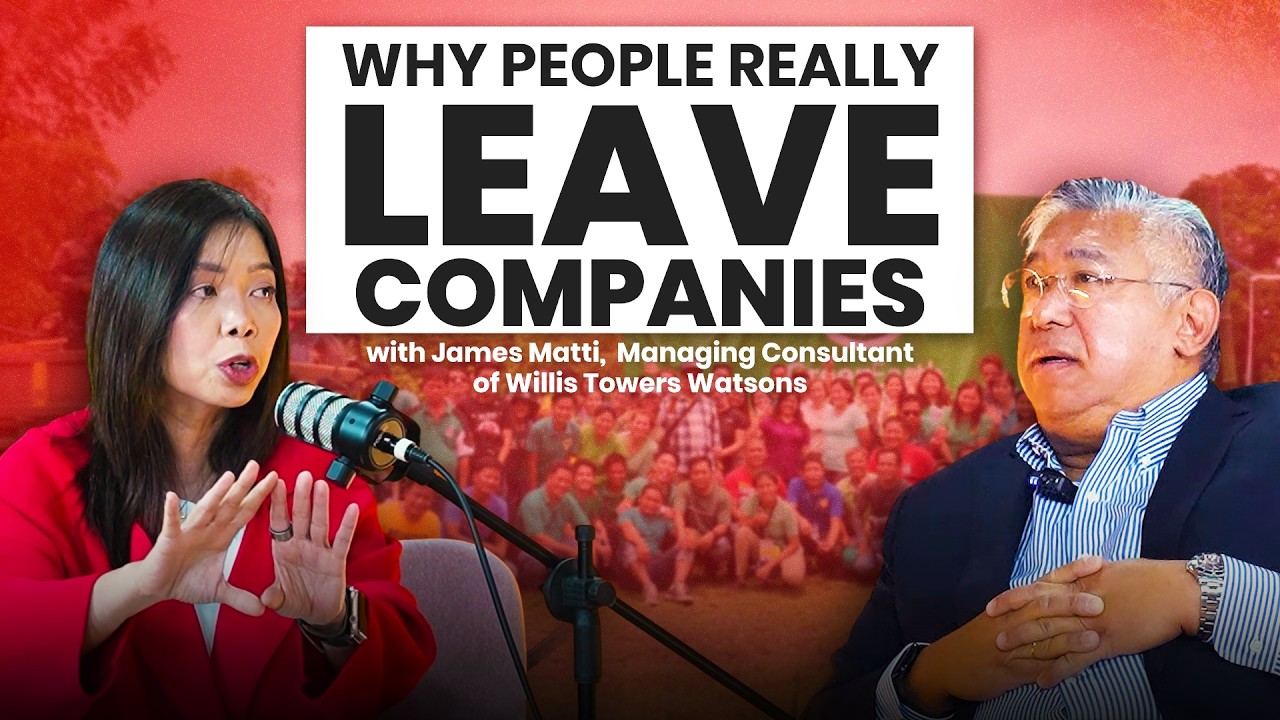
Subscribe on Spotify and YouTube
